
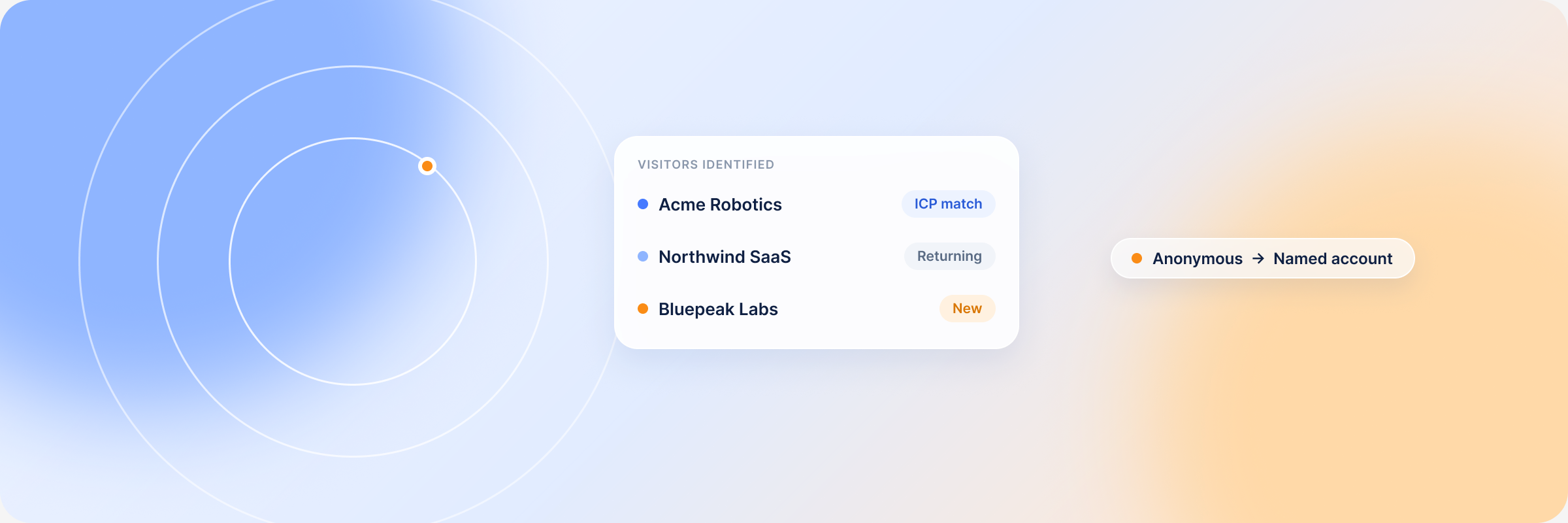
A name lands in Slack. Someone from an account you have been targeting for four months read your pricing page ninety seconds ago, and a rep can be in their inbox before they close the tab. That is what RB2B was built to do, and it does it quickly and cheaply enough that most teams evaluating it are really asking whether anything else is needed.
The question underneath is what you plan to do with the name. If it goes straight into a sequence, identification on its own is the product and RB2B is a direct answer. If the visit is one signal in a paid programme, the useful question is not only who came but what brought them, whether they look like someone you sell to, and whether any of it should change where the budget goes next week. That chain is what DemandSense is built around, and it is where the two tools stop overlapping.
The Short Answer
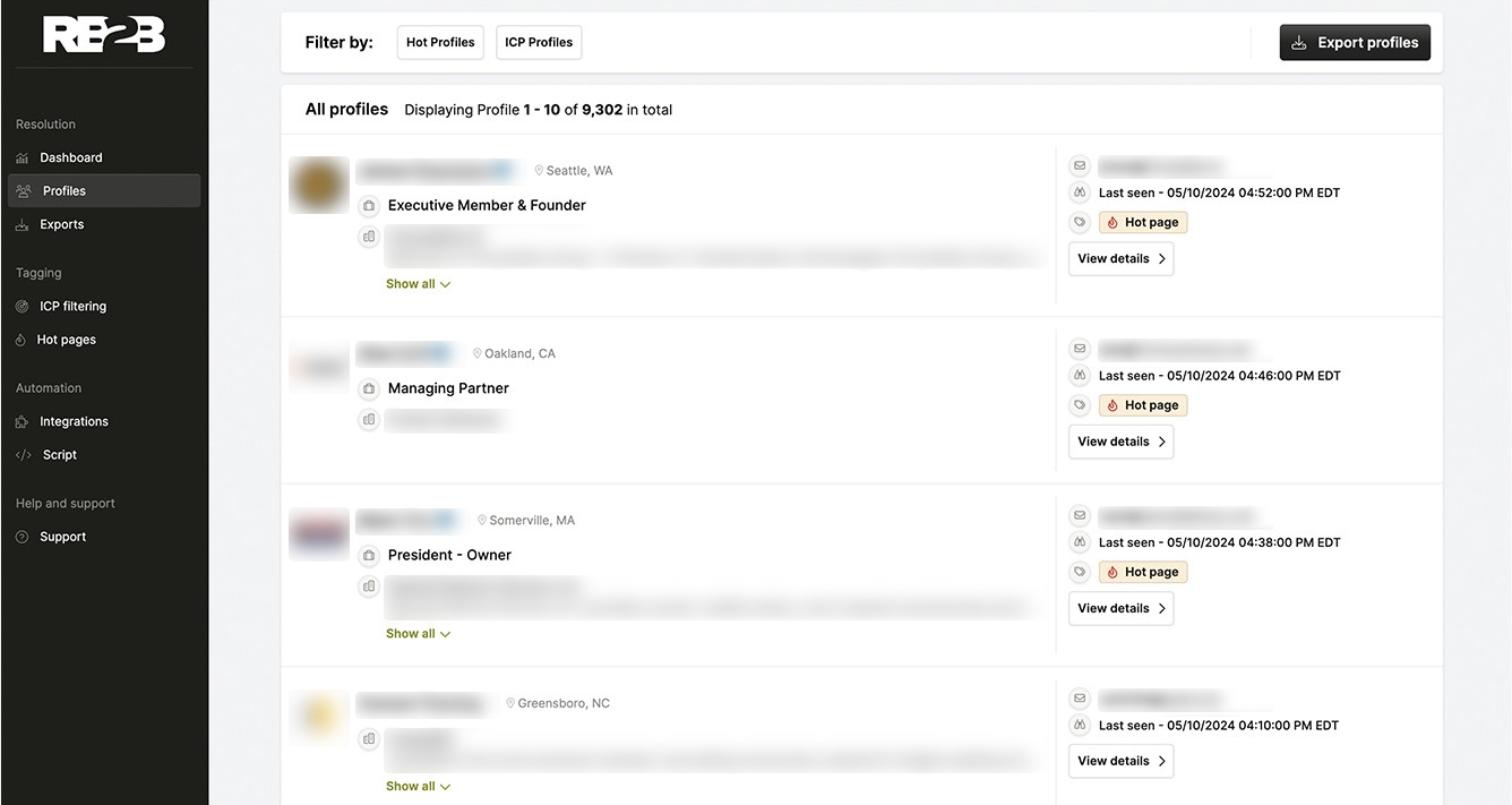
RB2B identifies anonymous website visitors and delivers profiles to Slack and Teams, typically within seconds of the visit. Contact-level identification covers US traffic, with company-level identification worldwide on every tier including the free one. It publishes its own coverage ranges, integrates with HubSpot, Salesforce, Clay, Apollo, Zapier and more, and filters identified visitors for sales with Hot Pages and Hot Leads. Plans run from a free tier at 150 resolutions a month to volumes in the millions.
DemandSense starts in the same place and keeps going: it names visiting companies worldwide and the people behind US visits, fastens each visit to the LinkedIn campaign that produced it, scores the account on ICP fit, and carries the thread through to the deal under thresholds you set. The same data feeds LinkedIn audiences and suppression, decides which hours your ads run and how often one company sees them, and sends closed-won deals back to LinkedIn through the Conversions API.
Choose RB2B if the job is getting a name to a rep fast, as a standalone layer. Choose DemandSense if the visit is part of a paid programme you have to defend and adjust.
What Buyers Ask of a Visitor Identification Tool
Two rows carry most of the decision: how fast a name reaches a rep, and whether you can tell what brought them.
Where the Two Tools Agree
Both exist because most B2B visitors leave without filling in a form. Both fix it with a tracking script that matches anonymous traffic to company and individual records, both push what they find into your CRM, both flag high-intent page visits so sales can prioritise, and both identify companies anywhere in the world while keeping person-level identification to US traffic. That shared foundation is why the two end up in the same evaluation, and on the identification job itself they are closer than either vendor would find convenient to admit.
Three Places the Week Looks Different
Knowing what brought them
RB2B tells you who visited. What it does not tell you is why they were there: whether the person arrived from a LinkedIn retargeting ad, a competitor comparison search, an email or a podcast mention is not visible, because its visitor signal runs independently of ad data.
That context changes the follow-up. Someone who clicked an ad about a specific use case and then read your pricing page needs a different opening line from someone who arrived on a comparison query, and the rep writing to them has no way to tell the two apart. DemandSense connects the visit to the campaign that produced it, so the outreach starts from what the person has already seen, and the visit lands on the account timeline beside the LinkedIn touches and the CRM deal.
Turning a name into a budget decision
Both tools narrow the list, for different readers. RB2B’s Hot Pages and Hot Leads prioritise which identified visitors deserve a rep’s time, filtered on revenue, size, seniority, department and geography. That is sales triage, and it is well shaped for it.
DemandSense scores every identified visitor on fit and engagement using rules you write, with scores that decay so an account that went quiet does not stay hot forever. Those segments become LinkedIn audiences, and the same data drives audience tuning and suppression, so a competitor, a current customer or an active deal drops out of your targeting in one click. Suppression syncs weekly rather than instantly.
One layer feeds a sequence. The other decides where the next fortnight of budget lands.
What happens after the deal
RB2B’s scope ends at identification and activation. There is no revenue attribution, so connecting a visit in March to a deal that closes in November means a second tool and a second bill.
DemandSense carries that part. Awareness, Engagement and Intent each hold thresholds you can move, read across three, six or twelve months, with Won ROAS on closed revenue. Spend protection works the same window in reverse, pulling accounts that already bought out of your targeting without anyone remembering to.
Sending Revenue Back to LinkedIn: The Conversions API
Everything RB2B does moves a name outward: to Slack, to a sequencer, to your CRM. The Conversions API moves an outcome the other way, back into the platform that started the visit, and neither a Slack alert nor a sequence closes that loop.
Here is why it matters. LinkedIn tunes delivery around the conversion you configured. Give it form fills and it becomes expert at finding people who fill in forms, a group that overlaps your buyers without being them. Give it the closed deal and it starts hunting for the buyer instead.
So DemandSense returns the outcome: won deals as Purchase events with the amount attached, qualified opportunities as Qualified Lead events, six identifiers apiece on a daily sync, arriving as a conversion rule a campaign can chase. Both event types also carry a 365-day window where most others stop at 180, which is what makes a long B2B cycle countable. RB2B offers nothing in this direction. The DemandSense guide to LinkedIn Ads conversion tracking sets up the rest of the stack.
Asking Your Data a Question
RB2B ships an AI assistant of its own but publishes no MCP server, so questions stay inside its product. DemandSense exposes one, read-only and open on every plan, which means the question can come from Claude or ChatGPT and be answered from the ad, the visit and the deal at once. Asking which ICP-fit companies saw the ads, came to the site, and are still missing from the CRM is one query rather than a reconciliation job. The live walkthrough shows it running.
Is There a Downside?
RB2B’s recurring themes among reviewers are records overwriting existing CRM data and bot traffic arriving as identified visits, and the lower tiers are narrower than their prices suggest, with no business email addresses and no integrations past Slack and Teams until $149. The notes on DemandSense run differently: there is a fair amount of functionality to find your way around before it becomes second nature, and audience activation goes to LinkedIn and nowhere else. Products in this category change monthly, so both lists are worth re-testing rather than trusting.
On G2 RB2B reads 4.5 and DemandSense 5.0. The longer track record in this category is theirs, and a buyer is right to weigh it.
Pricing
| DemandSense | RB2B | |
|---|---|---|
| Free | No free plan. A 30-day trial instead | Free: company-level ID, Slack, 150 resolutions a month |
| Entry | $89/mo: 200 credits, every feature | $79/mo Starter: contact-level for US traffic, 300 resolutions, no email addresses |
| Mid | Plus, from $149/mo: the same features with 500 credits | $149/mo Pro: business emails, all integrations, from 600 resolutions |
| Upper | Credit ladder to $999/mo at 10,000 credits | $199/mo Pro+: Premium Resolution, volumes into the millions |
| Free trial | 30 days, every feature, no credit card | Free plan, plus 7 days of Pro |
| G2 | 5.0 | 4.5 |
Both bill on volume, so compare on your real traffic rather than the entry price. Read the RB2B tiers by what unlocks rather than by the number: business email addresses and integrations beyond Slack and Teams begin at $149, which is the row most evaluations actually land on.
What RB2B Does Differently
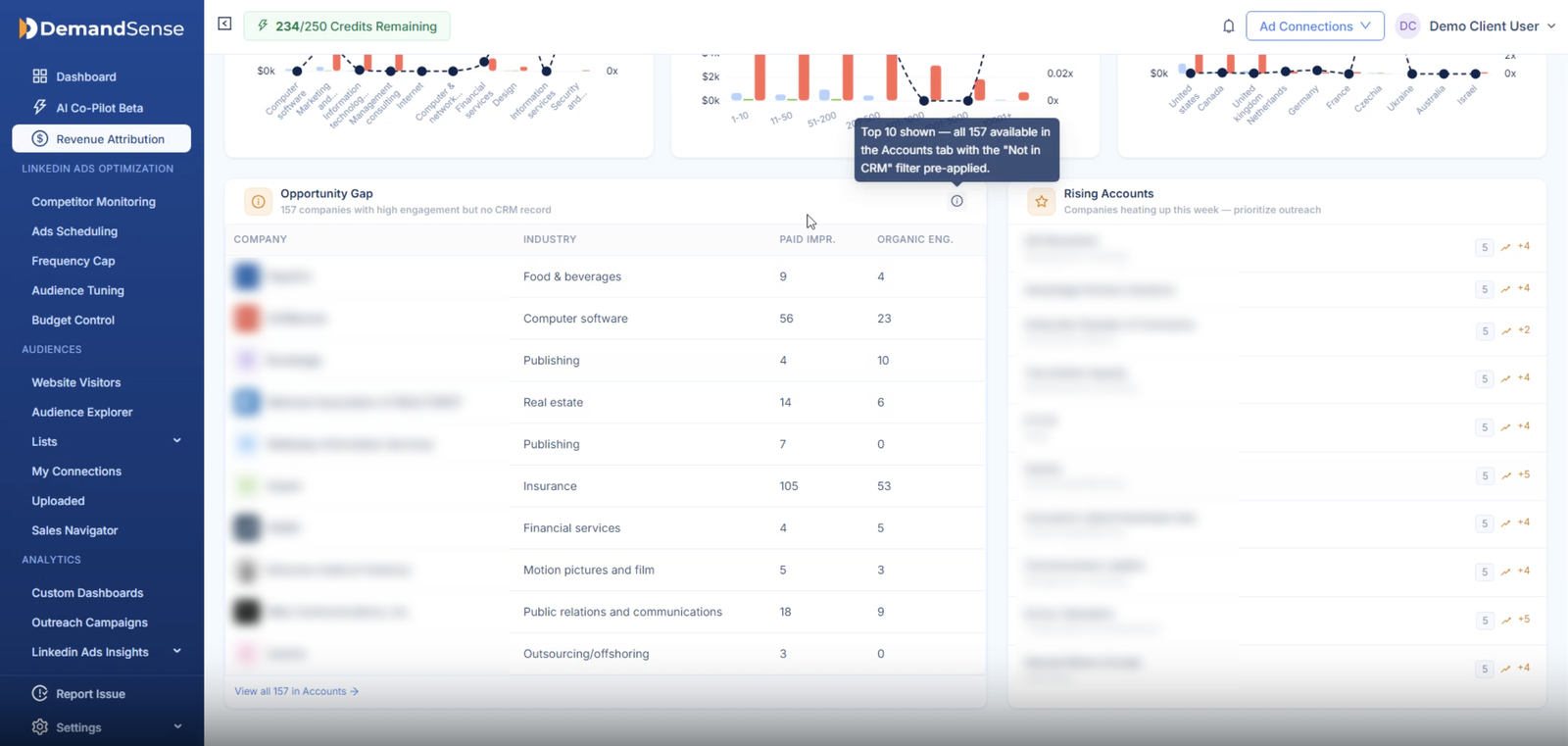
- Speed to a human. Profiles land in Slack or Teams within seconds, on every tier including free. DemandSense surfaces the same accounts in Rising Accounts and Opportunity Gap and can push them over a webhook. Slack and Teams alerts are not part of DemandSense today.
- A free way in, and published coverage. A free plan at 150 resolutions a month and public identification ranges mean you can size the thing before paying. DemandSense unlocks everything for 30 days instead and publishes no rate, on the grounds that yours is the only one worth knowing.
- Volume and sales tooling. Plans reach millions of resolutions a month, with Clay and Apollo alongside the CRMs. The DemandSense credit ladder tops out at 10,000 a month, and its integrations point at the ad platform rather than the sequencer.
What DemandSense Does With It
The difference is a chain rather than a feature. RB2B hands you the first link; the rest is what DemandSense adds to it:
- The cause. The visit comes in fastened to the LinkedIn campaign behind it, so a rep opens with the thing the person already read.
- The fit. Every identified visitor is scored against your ICP on rules you write, and the score decays, so a quiet account stops looking hot.
- The consequence. Those segments become LinkedIn audiences, and the same scoring drives audience tuning and one-click suppression of a competitor, a customer or a live deal.
- The outcome. Influenced pipeline, revenue and Won ROAS, on thresholds and a window you set, months after the visit that started it.
- The return trip. Won deals go back to Campaign Manager with their value, and spend protection quietly pulls closed accounts out of your targeting on a rolling twelve-month lookback.
Verdict
Choose RB2B if the question you are hiring a tool to answer is who is on my site and how do I get their details to the right rep before they leave. It answers that in seconds, it starts free, and it publishes what it will find so you can size it first. It is also the right call if attribution is already solved elsewhere and you want identification as a standalone layer, or if you are not running LinkedIn ads in any meaningful way, because most of what makes DemandSense worth the money is tied to a live programme.
Choose DemandSense if the question is who is on my site, what campaign brought them, do they match who we sell to, and should I move budget because of it. DemandSense answers it in one place: the visit arrives tied to the LinkedIn campaign behind it, the account is scored against your ICP, influenced pipeline and revenue are measured under thresholds you set, and won deals go back to LinkedIn so the next campaign is aimed at buyers. Accounts that already bought drop out of your targeting on their own. From $89 a month, with a 30-day trial.
Start a 30-day trial and follow one account from the ad to the deal on your own traffic.
FAQ
At company level, yes, on every tier including the free one. Its contact-level identification, the named person with a LinkedIn profile and email, is limited to US traffic. DemandSense works the same way: companies worldwide, people for US visits.
No. Its scope runs from identifying a visitor to activating that record in your CRM and sales tools. Connecting a visit to a deal that closes months later needs a second tool. DemandSense carries influenced pipeline, revenue and Won ROAS, on models you can retune and a window reaching twelve months back.
$149 a month on the Pro plan. The free tier is company-level only, and the $79 Starter plan delivers LinkedIn URLs to Slack and Teams without business email addresses or other integrations. Business emails and the wider integration set begin at Pro.