
If you want your ads in front of “CMOs at mid-sized B2B SaaS companies”, LinkedIn is still the easiest place to do it. It’s also one of the most expensive: in DemandSense’s 2026 benchmark data, the median LinkedIn CPC is $9.68, and some of that budget always lands on the wrong people. You often find out only when sales can’t close the leads.
So the best alternatives to native LinkedIn targeting depend on what you’re trying to fix. Microsoft Advertising lets you use LinkedIn profile data on Bing and its own network. Google Search, with Customer Match if your account qualifies, catches buyers who are already looking. And if you work from a named account list, ABM and programmatic platforms are built for that.
What Are the Best Alternatives to Native LinkedIn Targeting?
Microsoft Advertising, Google Search with Customer Match, ABM and intent platforms, programmatic, Reddit and Meta each offer a key LinkedIn targeting capability, and some do so at lower prices:
| Alternative | Best For | Main Strength | Main Trade-Off |
|---|---|---|---|
| Microsoft Advertising | Teams running BOFU campaigns targeting Bing users | You can target the audience based on their LinkedIn profile, and it changes bids for matching people | Ads run on Microsoft properties, not LinkedIn |
| Google Search + Customer Match | Teams targeting high-intent leads and known prospects (conversion campaigns) | Ads reach buyers searching for solutions when they are still active | Full Customer Match targeting needs 90 days of Google Ads history and over $50,000 lifetime spend |
| ABM/intent platforms like 6sense, Demandbase | Enterprise teams running ABM campaigns | Account-level ad reporting and cross-channel targeting | High costs and setup time |
| Programmatic | Teams running awareness campaigns | You run ads at scale across websites and expand your reach | Bots can eat up your ad spend |
| Teams looking to engage niche communities not reachable on LinkedIn | Ads are shown in the subreddits where your buyers are already present and active | No firmographic filters, so your ads reach everyone in the group, including the wrong job titles | |
| Meta | Teams running retargeting campaigns for known prospects | Builds audiences from your first-party data and also finds lookalikes | Raw CSV lists can lead to low match rates, especially when the lists have professional emails that clash with personal emails used for logins |
Pick an alternative that can help you achieve your campaign goal:
- Microsoft Advertising is the best fit when building an audience from scratch. Microsoft says it’s the only ad platform besides LinkedIn that can target by LinkedIn profile data like company, industry and job function.
- Google Search + Customer Match is the best fit for capturing high-intent buyers.
- ABM/intent platforms are the best alternatives for reaching named accounts.
- Programmatic is the best fit for creating brand awareness across platforms at scale.
- Meta and Reddit are good for nurturing and engaging warm prospects.
Judge every option on qualified pipeline, not CPM or CTR: low costs on the wrong prospects are still a waste.
Can Microsoft Advertising Replace LinkedIn Job-Title Targeting?
No. Microsoft’s filters like job function are still too general, with categories like sales or accounting, while LinkedIn lets users target specific job titles. The ads also run in Microsoft’s network and use its own inventory, not LinkedIn’s.
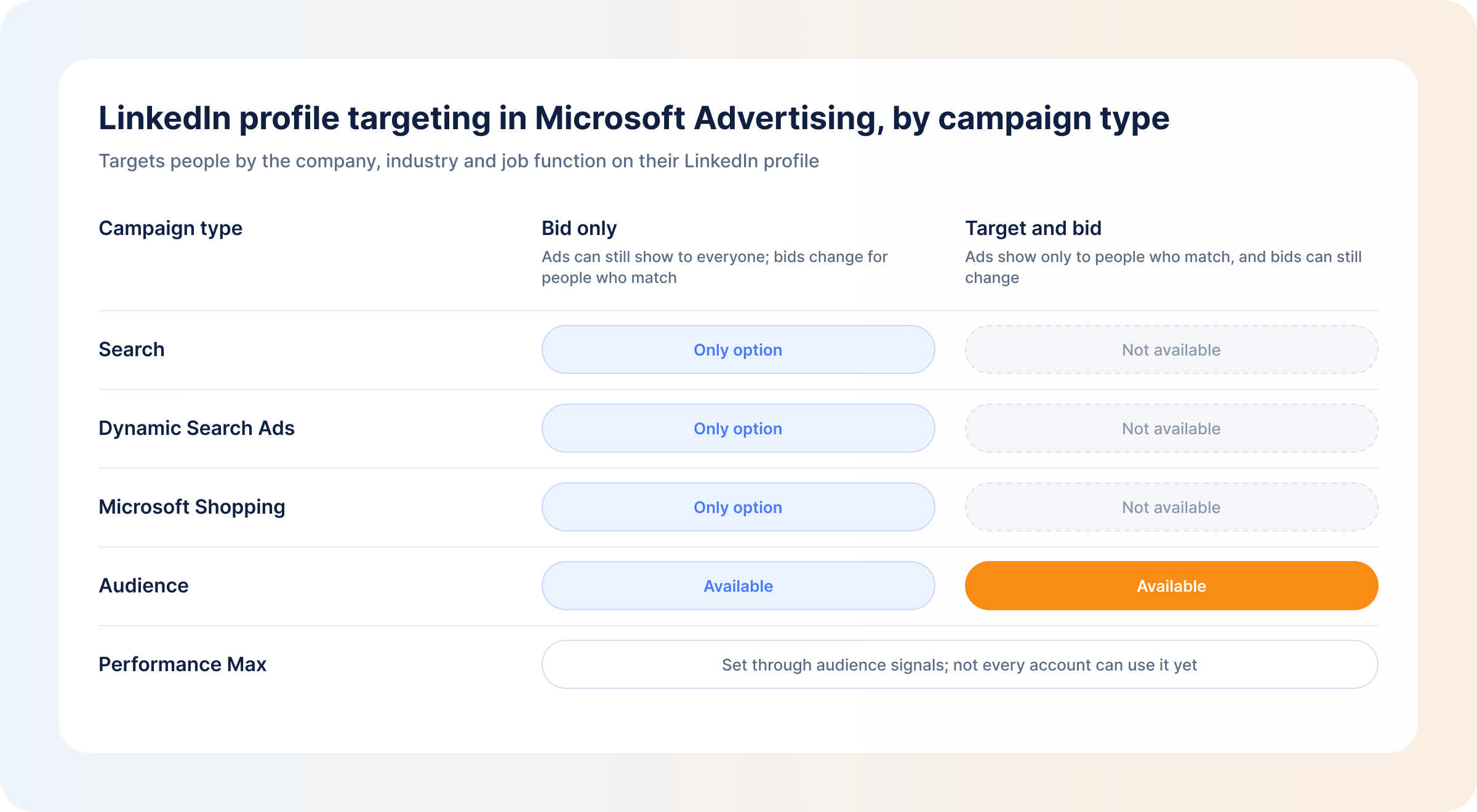
Microsoft Advertising is still the closest to LinkedIn’s professional targeting, because marketers can target audiences based on their LinkedIn profile data like company, industry and job function (LinkedIn profile targeting) across Search, Dynamic Search Ads, Microsoft Shopping, Audience and Performance Max campaigns. Not every account can use it in Performance Max yet.
For Search, Dynamic Search Ads and Microsoft Shopping campaigns, LinkedIn profile targeting is always Bid only: it raises or lowers bids for matching people but doesn’t narrow who sees the ads.
For Audience campaigns, you can choose Bid only or Target and bid, which ensures only people matching your selections see the ads.
You can also build:
- Custom audiences from first-party data
- Customer match lists from email addresses customers share with you
- Remarketing lists to re-engage website visitors
- Dynamic remarketing lists for people who have engaged with specific product IDs
- Similar audiences: audiences similar to the ones in your remarketing lists
- Impression-based remarketing lists for people who have seen your ads
- In-market audiences for high-intent audiences
- Custom segments
- And combined lists where you combine multiple audience lists using AND, OR and NOT conditions
You layer the professional data on top of the people already searching for solutions on Bing to find high-intent audiences, so it’s more of a LinkedIn complement than a replacement. Use LinkedIn to create awareness and nurture the audience, then run Microsoft ads for BOFU campaigns to drive conversions.
Can Google Search and Customer Match Reach the Same Buyers?
Search catches active demand by query, and your ads reach accounts including prospects you don’t know of; Customer Match lets you upload first-party lists (known accounts) and reach people who have already interacted with your brand.
Google Search lets you target audiences searching specific keywords, making it the best for capturing demand and high-intent buyers. More buyers search for solutions on Google than Bing, so you reach more buyers than on Microsoft.
You can reach buyers through:
- Broad match: all searches related to your keyword, including broad variants
- Phrase match: searches for your keywords plus relevant variants only
- Exact match: only searches with the same meaning as your core term
However, Search only covers the people already looking to buy and cannot help with creating brand awareness or driving engagement. And by the time prospects are at their buying stage, many have already made up their minds, and reaching out to them at that stage may be a little too late. You can run awareness campaigns on YouTube and the Display Network, and they work best with a list of your own, which is where Customer Match comes in.
Also, since there are no firmographic filters, your ads reach everyone who searches your keywords, including poor-fit accounts like junior employees and students.
Like LinkedIn’s Matched Audiences, Customer Match lets you upload your own lists of customers to reach and re-engage people on Search, the Shopping tab, YouTube, Gmail and Display. It matches only people signed in to Google, and the match rate can be even lower if the email addresses on the list don’t match the ones users signed in with.
Additionally, full Customer Match targeting needs 90 days of Google Ads history and over $50,000 lifetime spend; below that, you can only use it for observations and exclusions. List members also expire after 540 days, and you must add or update at least 100 members during that window to keep the list eligible.
If your account qualifies, layering Customer Match lists on top of Search audiences narrows down your audience and can help you build segments that can actually convert. You can also decide to exclude accounts on your list, so you don’t waste ad spend on existing customers or closed accounts.
When Do ABM Platforms, Programmatic, Reddit or Meta Make Sense?
These are the best alternatives if you want to engage audiences beyond LinkedIn and expand your reach.
ABM Platforms: Best Fit for ABM Campaigns
Account-based marketing (ABM) platforms are the best alternatives to native LinkedIn targeting when the goal is to reach and engage with named accounts.
Platforms like Demandbase and 6sense let users upload lists of known accounts and provide multiple filters (firmographic, technographic, CRM and intent data) that one can use to build strong ABM audience segments ready for personalized campaigns and even find high-priority accounts they can forward to sales.
However, most of these platforms are expensive and take time to set up.
Programmatic: Best for Cross-Channel Targeting
Programmatic advertising is the automated buying and placing of ads across websites, so it’s the best when you want to run awareness campaigns at scale.
Instead of manually bidding across platforms, you define the audience you would like to reach, the websites, budget, bidding rules and frequency, and your demand-side platform (DSP) finds available ad opportunities and bids according to campaign settings.
The main trade-off: you lose control over where your ads appear, which affects brand safety, as the algorithm can place your ads on inappropriate websites, and you can also waste spend on bot traffic.
Reddit: Best for Engaging Niche Communities
Reddit is the platform users go to for advice and to compare products within their subreddit communities. With Reddit Ads, you can target specific subreddit communities, people searching specific keywords, custom audiences, or engage Redditors based on interest.
It’s the best for targeting technical and developer B2B teams who may not be active on LinkedIn, but it has no firmographic filters, so even poor-fit accounts will see your ads.
Meta: Best for Broader Reach and Audience Extension
Meta makes more sense for awareness campaigns where the goal is to reach more people. You upload your own list of customers and build custom audiences you can target across Meta platforms. It also analyzes the list and surfaces lookalike audiences for you to reach new people.
Main trade-off: raw CSV lists give you low match rates, especially when the listed emails and the login emails clash. Data enrichment platforms can help you solve this and improve your match rates.
How Do You Cut Wasted Spend Inside LinkedIn Before Moving Budget Elsewhere?
You can often fix wasted spend without leaving LinkedIn. Even with LinkedIn’s targeting precision, ads still reach the wrong people, mainly because of broad audience attributes like job function.
DemandSense Audience Tuning gives you seven views of who your ads reached: accounts, industries, countries, company sizes, job titles, job functions and seniorities, with clicks, impressions and conversions per row.
You identify poor-fit accounts, and with a thumbs down you remove such segments from delivery, across all campaigns or in one. DemandSense syncs the exclusions to LinkedIn weekly.
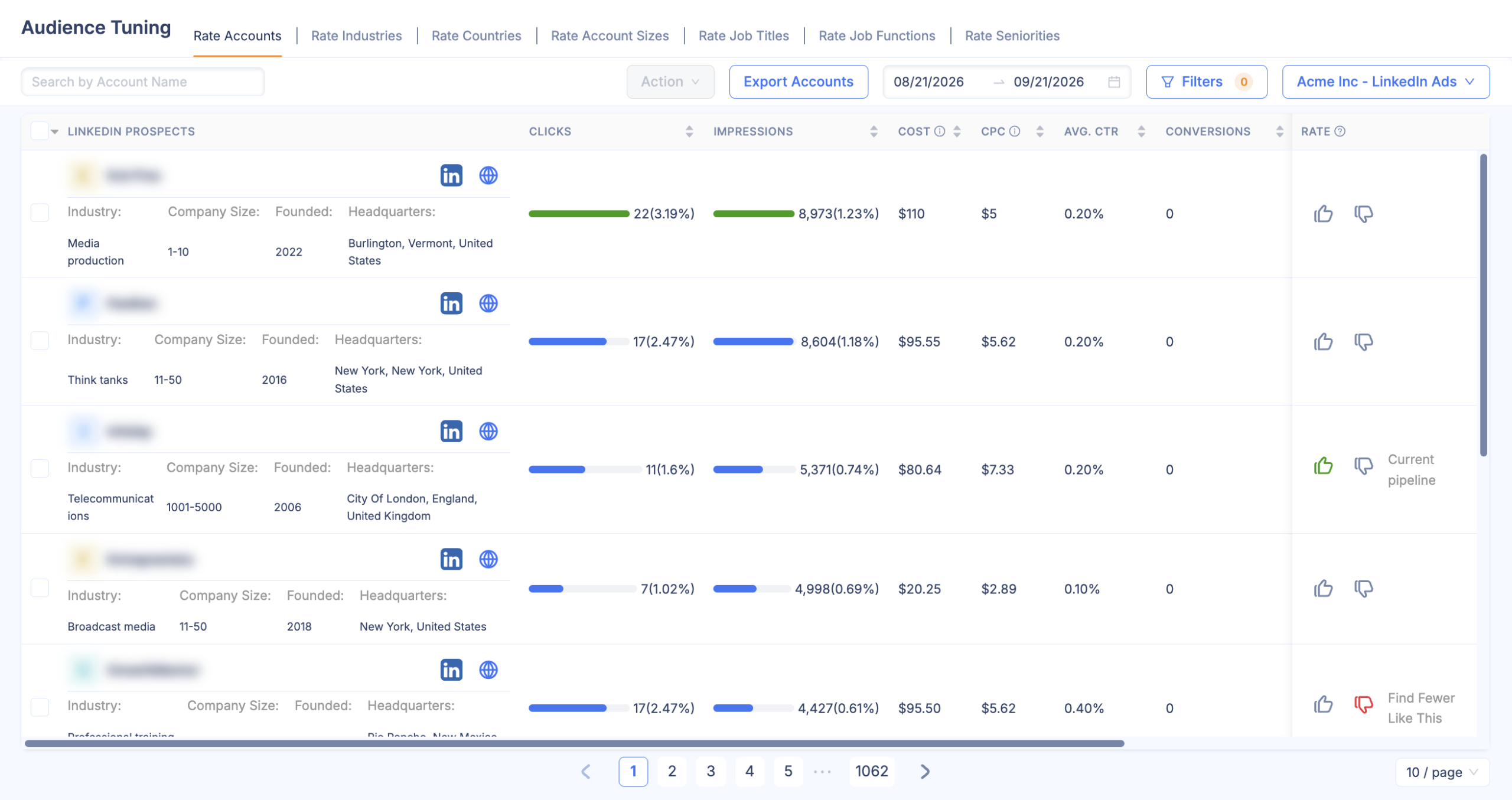
LinkedIn still has the best native targeting capabilities, so before seeking an alternative, try DemandSense Audience Tuning free for 30 days, no card needed.
Which Alternative Should You Test First?
Each alternative offers its own targeting capabilities, so the best depends on what you want to achieve:
- Brand awareness and extended reach? Meta and programmatic ads are the best fit.
- Driving engagement and building trust? Reddit, Google’s Customer Match and Meta.
- Want to capture in-market demand? Google Search and Microsoft Advertising.
- Reaching and engaging buying committees of named accounts? ABM/intent platforms.
Many marketers seek LinkedIn alternatives because of the high costs, but if you get the desired outcome, the cost should not be an issue: lead quality matters most. Check what native LinkedIn targeting is already wasting before adding channels; DemandSense Audience Tuning shows you that on your own account.
FAQ
People are using Google Search, Microsoft Advertising, ABM/programmatic, Meta and Reddit communities to reach and engage their audience beyond LinkedIn. The best alternative depends on what you want to achieve.
You can either build your own audience or use Auto-Targeting. LinkedIn provides audience attributes to help you narrow your audience to your ICP: Company: Company Name, Company Industry, Company Size, Company Revenue, Company Growth Rate, Company Followers, Company Connections, Company Category. Job Experience: Job Title, Job Function, Job Seniority, Member Skills, Years of Experience. Also Education, Demographics, Interests and Traits, Member Groups, plus Matched Audiences and predictive audiences. An audience needs at least 300 members. More in this guide to LinkedIn targeting options.
Not necessarily. LinkedIn ads might be expensive, but LinkedIn’s targeting precision still lets you reach quality leads who bring in revenue. Test a second channel against the same accounts and compare its qualified opportunities and cost per opportunity against LinkedIn to find the best channel for your business. The right LinkedIn Ads tools can also make your current budget go further.